

See More.
Understand Better.
Decide with Confidence.
Non-destructive testing (NDT) helps assess materials and components without making them unsuitable for their intended use. It can provide valuable information during fabrication, maintenance, repair and asset evaluation.
Technov NDT and inspection service is centred on helping clients identify relevant conditions and make informed decisions about their work.
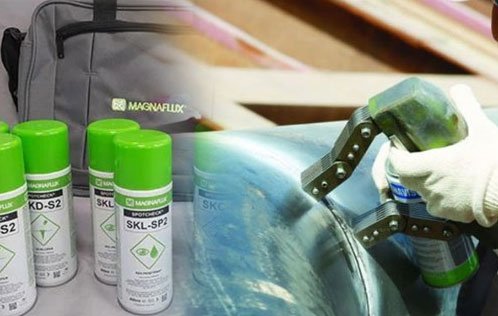
Magnetic Particle Inspection (MPI)
MPI is a non-destructive testing process for detecting surface discontinuities in ferro-magnetic materials. Finely divided magnetic particles, applied to the magnetized part, are attracted to and outline the pattern of any magnetic-leakage fields created by discontinuities.
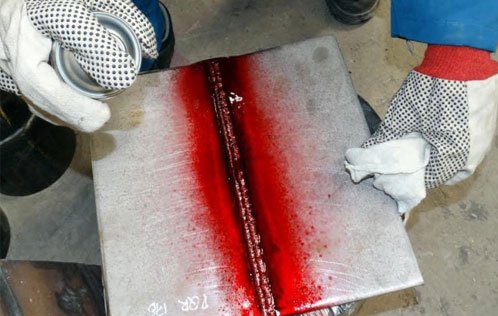
Liquid Penetrant Testing (LPT)
LPT is a Non-Destructive Testing method used to detect surface-breaking defects in materials such as welds, pipes, and plates.
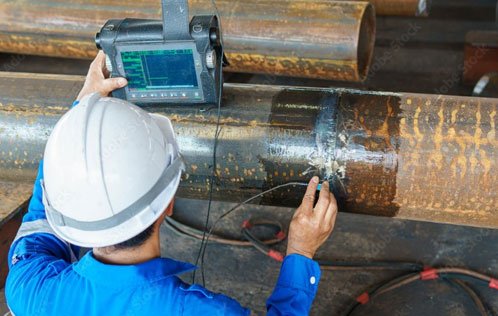
Ultrasonic Inspection (UT)
A method of detecting sub-surface flaws by directing a high-frequency sound beam through the material at various angles. The response helps to determine location, size and type of flaw such as cracks, lack of fusion, slag inclusions, porosity etc.
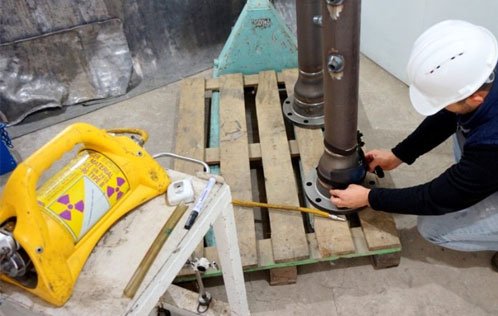
Radiography Testing (RT)
Industrial radiography is a nondestructive testing method of inspecting materials for hidden flaws by using the ability of short wavelength electromagnetic radiation (high energy photons) to penetrate various materials.
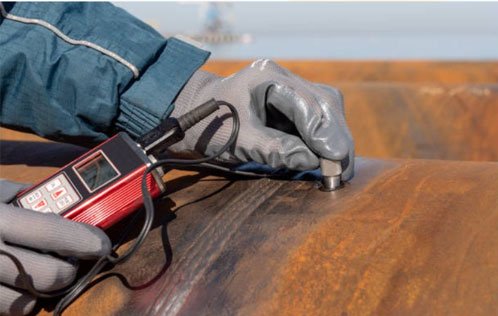
Ultrasonic Thickness Gauge (UTG)
Determines sample thickness by measuring the time it takes sound to traverse through the material and back. The gauge then calculates the thickness based on the speed of the sound through the material.
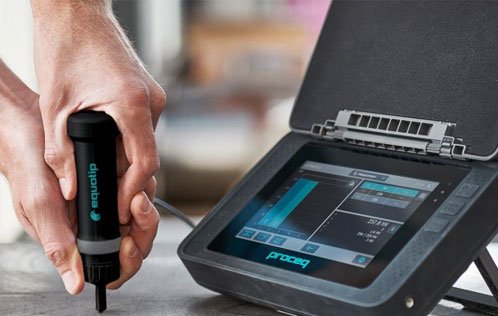
Ultrasonic Hardness Tester (HT)
"Ultrasonic Contact Impedance" method uses a vibrating rod with a 136 degree diamond. The difference in vibration frequency is calculated into a hardness value. The UCI method is portable, easy and accurate.
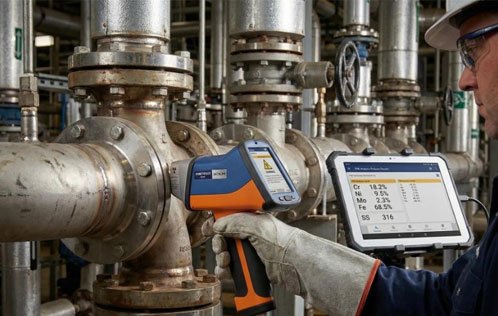
Positive Material Identification (PMI)
PMI is a testing method used to verify the chemical composition and grade of a metal material. Typical methods for PMI include X-ray fluorescence (XRF) and optical emission spectrometry (OES).

Visual Inspection (VT)
A quick and simple method of inspecting and complements all other disciplines within the field of NDT. The above methods may need to be utilized to confirm findings.
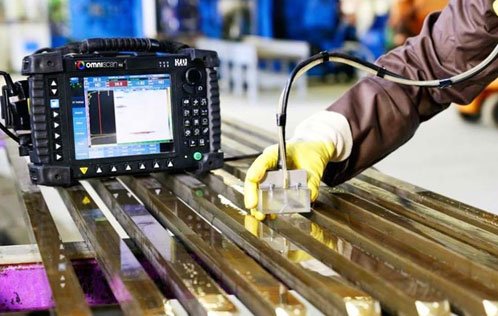
Phased Array Ultrasonic Testing (PAUT)
An advanced NDT method used to detect internal defects in welds and materials without damaging them. It uses multiple ultrasonic elements that can be electronically controlled to steer and focus the sound beam at different angles.
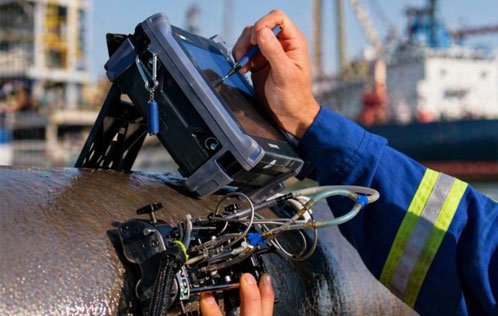
Time of Flight Diffraction (ToFD)
An advanced NDT method used to detect and characterize defects or flaws. ToFD relies on the principles of ultrasonic testing, measuring the time taken for ultrasound waves to travel through a material and bounce back.
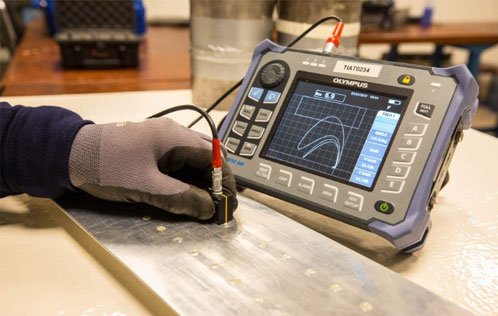
Surface Eddy Current Testing (ECT)
ECT is a Non-Destructive Testing method used to detect surface and near-surface defects in electrically conductive materials. ECT uses electromagnetic induction to generate eddy currents and detects changes caused by cracks or defects.
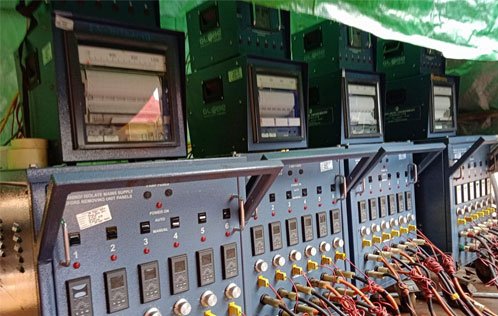
PWHT / PREHEAT
In welding, preheating and PWHT are heat treatments used to improve weld quality and reduce the risk of cracking. PWHT means heating the welded component after welding is completed, holding it at a specified temperature, and then cooling it in a controlled manner.
NEED RELIABLE NDT INSPECTION SUPPORT?
From routine inspection to advanced NDT techniques, Technov helps you identify defects, verify material condition and make confident maintenance and fabrication decisions.
A Clearer Route from Inspection to Action
Our aim is to provide findings that are recorded and communicated in a useful form, so the client can determine the appropriate next step.